
Why Oregon roofs grow moss
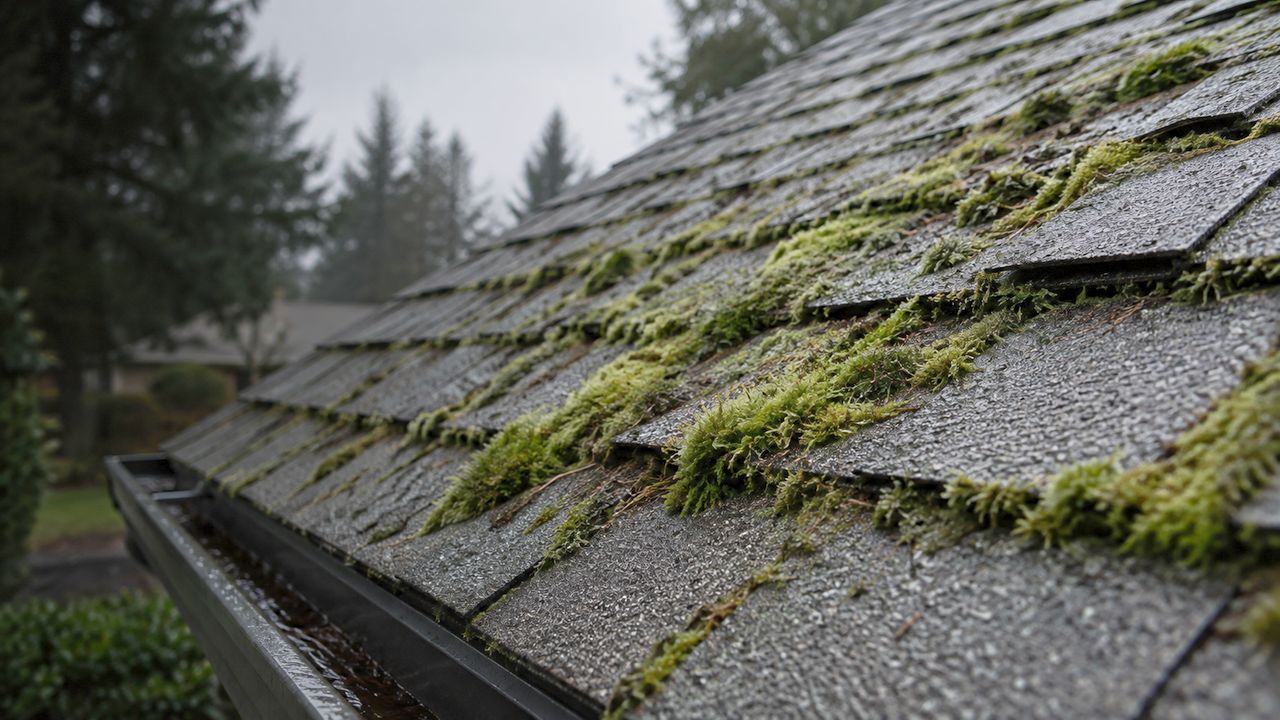
Moss needs three things: moisture, shade and something to hold on to. A Willamette Valley roof supplies all three for most of the year. The north-facing slope stays damp for days. Overhanging firs and maples keep the sun off and drop needles and leaves that hold even more moisture. The rough surface of an asphalt shingle gives moss a place to root.
That's why moss usually starts on the north side, under trees, and in the valleys where debris collects. If your roof has all three, moss isn't a sign you've done something wrong. It's a sign you live in Oregon.
What moss does to a roof
The moss isn't the problem. What's under it is.
- It lifts the shingles. Moss grows into the gap under a shingle's lower edge and thickens there, prying the shingle up. A lifted edge lets wind-driven rain underneath, and gives the wind something to grab.
- It holds water against the roof. A roof is meant to shed water and dry. A mat of moss works like a wet sponge sitting on the shingles, days after the rain has stopped.
- It loosens the grit. The granules on a shingle protect the asphalt from the sun. Constant moisture and the roots of the moss work them loose, and they end up in the gutter.
- It dams the water. Thick moss in a valley or along the rows slows runoff and pushes water sideways, under shingles it would normally run over.
How to tell how bad it is
You can judge a lot from the ground or from a ladder at the roof's edge, without walking on it.
- A thin green film, or dark streaks. This is usually algae or very young moss. It's mostly a cosmetic problem and the easiest stage to deal with.
- Small tufts along the shingle edges. Moss is established. It's time to deal with it before it thickens.
- Thick clumps, with shingle edges visibly lifted. Moss has been there for years. Water is likely getting under the shingles, and it's worth having the roof looked at, not just cleaned.
What not to do
- Don't pressure wash shingles. It takes the moss off, and the protective grit along with it. Shingle manufacturers warn against it, and it can take years off a roof in an afternoon.
- Don't scrape or wire-brush hard. Same problem. Lifted shingles also crack easily when they're forced back down.
- Don't walk a mossy roof. Wet moss is as slick as ice, and it's the kind of fall people don't walk away from.
- Don't ignore what the runoff touches. Some moss treatments are hard on plants and on the fish downstream. Follow the label and keep it out of the storm drain.
What helps
- Gentle removal and a moss treatment made for roofs, applied as the label directs. The moss dies and loosens, and rain carries much of it off over the following weeks.
- Keeping debris off the roof. Needles and leaves in the valleys hold moisture and feed the moss.
- Trimming back branches so the roof gets sun and air.
- Clean gutters, so the roof edge can dry.
- Zinc or copper strips near the ridge can slow regrowth. Rain carries a little of the metal down the roof, and moss doesn't like it.
None of this is one and done. In this climate, keeping moss down is regular maintenance, like cleaning the gutters.
When moss is hiding a bigger problem
Thick moss covers the shingles, which means nobody has seen their condition in years. Once it's cleared, you sometimes find a roof in fair shape that needs a few shingles replaced. Other times you find curled, brittle, bald shingles that were already at the end of their life.
If the roof is around twenty years old and carrying heavy moss, have someone look at the shingles themselves before you spend money on cleaning. Here's how to tell when a roof is wearing out.
When to call a roofer
Call when the shingle edges are visibly lifted, when you've had a leak or a ceiling stain under a mossy section, when shingles are missing or cracked, or when the roof is old enough that you're not sure what's under the green. A roofer can tell you whether you're looking at maintenance, a repair, or the start of a replacement conversation. We clean roofs and gutters, and while we're up there we'll tell you what the shingles look like underneath.
Common questions
Does moss mean I need a new roof?
No. Moss isn't the damage. What matters is what it has done underneath. Sometimes cleaning and a few repairs are enough, and sometimes the moss has been hiding a worn-out roof.
Can I pressure wash moss off my roof?
Not off asphalt shingles. The pressure strips the protective grit along with the moss, and shingle manufacturers warn against it. Pressure washing is for concrete, not shingles.
Will the moss come back?
In the Willamette Valley, yes, eventually. Shade and moisture bring it back. Trimming branches, keeping debris off the roof and metal strips near the ridge all slow it down.
Are the black streaks on my roof moss?
Usually not. Dark streaks are typically algae. It looks bad, but it doesn't lift shingles the way moss does. Moss is green, raised and soft.
Is it safe to go up and clear it myself?
A mossy roof is one of the most dangerous surfaces around a house, especially when it's wet. If the job means walking on the roof, it's worth leaving to someone with the right safety gear.
Tell us what you're seeing.
Call, text, or send a request. We'll talk it through and set up a time to look at the roof.
We clean roofs and gutters around Woodburn: roof cleaning and moss removal.
Keep reading: Repair or replace? Signs your roof is wearing out · Water stain on the ceiling? Here's where roof leaks start